Arbitration In Nepal
Published on: May 21, 2024
Category: Uncategorized
Arbitration in Nepal serves as a vital alternative dispute resolution mechanism, offering a confidential, efficient, and impartial means of settling commercial disputes outside of traditional court proceedings. Governed primarily by the Arbitration Act, arbitration in Nepal allows parties to resolve disputes through a neutral arbitrator or panel chosen by mutual agreement. The process typically involves submitting evidence, presenting arguments, and reaching a binding decision, known as an arbitral award. Arbitration offers flexibility in procedure, autonomy in selecting arbitrators, and confidentiality in proceedings, making it an attractive option for businesses seeking timely and cost-effective resolution of disputes. With the increasing complexity of commercial transactions, arbitration in Nepal plays a pivotal role in fostering commercial confidence, promoting foreign investment, and ensuring the effective enforcement of contractual rights.
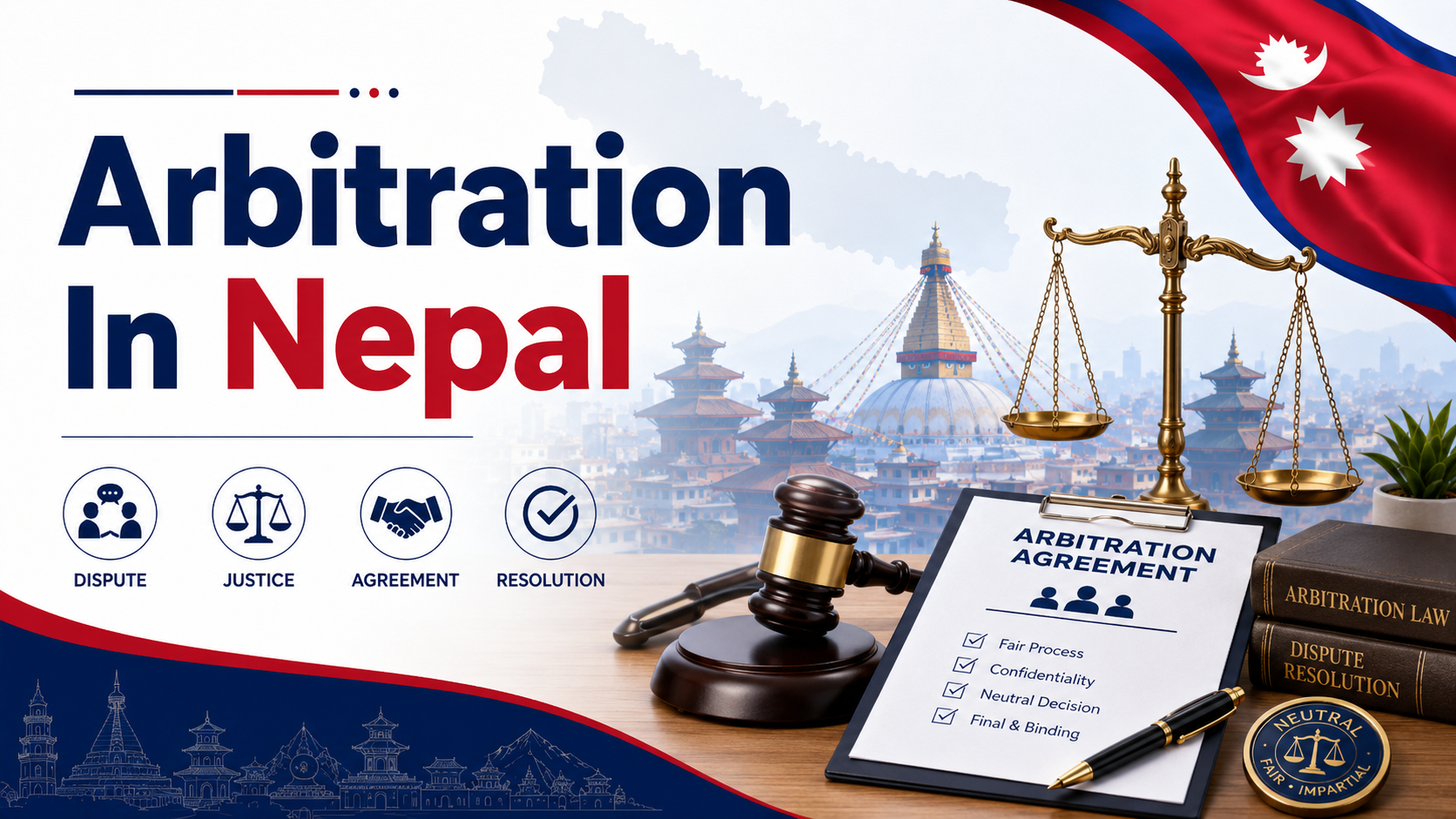
Description
Arbitration Law in Nepal
Introduction
The primary legislation governing arbitration in Nepal is Arbitration Act, 1999 (2055) of Nepal. This Act replaced the previous Arbitration Act of 1981 (2038).
The Arbitration Act outlines the comprehensive procedure for resolving disputes through arbitration within Nepal.
Dispute Settlement through Arbitration
If an agreement includes a detailed procedure for settling disputes through arbitration, then the dispute should be resolved according to the terms outlined in the agreement. However, in the absence of any such procedure specified in the agreement, the dispute should be settled according to the procedure outlined in the Arbitration Act.
Additionally, civil suits related to commercial matters can be resolved through arbitration by mutual consent of the parties involved.
Number of Arbitrators
In Nepal, the number of arbitrators required during the arbitration process is not specified by law. Instead, it is determined by the parties involved in the arbitration. If the agreement between the parties does not specify the number of arbitrators, then three arbitrators are typically required to conduct the arbitration proceedings in Nepal.
In case where appointed arbitrators are in even number, the existing arbitrators shall appoint one more arbitrator in order to make the number of arbitrator odd.
Appointment of Arbitrator
The process of appointment of arbitrators must be started within 30 days from the date when the reason for the settlement of a dispute through arbitration arises.
In case agreement mentions name of arbitrators they shall be appointed accordingly.
In case the agreement has incorporated the separate provision of appointment of arbitrators, an appointment should be done as mentioned in the agreement.
Notwithstanding anything above, party of the agreement will respectively appoint one arbitrator each and the appointed arbitrators should appoint the third arbitrator who should work as the chief arbitrator.
Appointment of arbitrator through the court:
If the parties fail to appoint an arbitrator as stipulated in the arbitration agreement, or if the agreement does not specify the arbitration procedure, an application can be submitted to the High Court. This application should include a copy of the agreement and details of at least three individuals mention the full name, address, occupation and the field of specialization who are to be appointed as arbitrators.
If the parties cannot reach a consensus on the proposed arbitrator's name, the High Court will appoint a qualified arbitrator within 60 days from the date of receiving the application. The decision made by the court in this regard is final.
Qualification of arbitration
In Nepal, individuals may be disqualified from serving as arbitrators for several reasons:
- Those disqualified from entering into contracts as per prevailing laws.
- Being convicted by a court on criminal charges involving moral turpitude.
- Having a personal interest in the dispute that needs to be settled through arbitration.
- Not possessing the specific qualifications as specified in the agreement for eligibility as an arbitrator.
- Individuals who have become insolvent or been declared bankrupt.
Removal of arbitrator
If parties wish to remove an arbitrator, they can do so according to the provisions outlined in the agreement.
In the absence of specific provisions in the agreement regarding the removal of arbitrators, parties can remove an arbitrator under the following conditions:
- If an arbitrator is clearly biased or discriminates against any party instead of working impartially.
- If an arbitrator engages in improper conduct or commits fraud during the arbitration process.
- If an arbitrator frequently makes mistakes or irregularities during arbitration.
- If an arbitrator fails to attend arbitration meetings or refuses to participate in arbitration proceedings on more than three occasions without providing satisfactory reasons, with the intention of unduly prolonging or delaying the proceedings.
- If an arbitrator takes actions contrary to the principles or rules of natural justice.
- If an arbitrator is found to lack the necessary qualifications or has ceased to be qualified.
Place of arbitration
If the agreement does not specify the place of arbitration, the following steps are followed:
- Place of arbitration shall be determined by the concerned parties.
- If the concerned parties are unable to select a place within 15 days from the date of appointment of the arbitrator or fail to reach an agreement, then the place of arbitration shall be determined by the arbitrator.
Language to be used in arbitration:
If the arbitration agreement specifies the language to be used, it shall prevail. In cases where the agreement is silent on the language, the following steps apply:
- The language for arbitration is determined by the mutual consent of the parties involved.
- If the parties cannot reach a consensus on the language, the language used in the agreement itself shall be utilized during the arbitration proceedings.
Proceedings of Arbitration in Nepal
Following steps are included in settlement of dispute relating to arbitration:
Step 1: Submission of Claims
· If agreements specifies then submission should be as per the agreement
· If a arbitrator is selected after the dispute begins, then submission shal be made within 3 months from selection of arbitrator
· If the agreement mentions an arbitrator, you must submit your case within 3 months from when the dispute starts and needs arbitration.
Step 2: Counter claims
If the agreement specifies a deadline, the other party must object within that time. If there's no deadline, counterclaims must be made within 30 days of receiving the initial claim.
Step 3: Rejoinders
The submission of rejoinders should occur within 15 days from when the counterclaim is submitted. It's also required to provide a copy of the rejoinder to the opposing party.
Step 4: Extension of Submission Time
If a party can't submit their counterclaim or rejoinder on time due to reasons beyond their control, they can request an extension from the arbitrator within 15 days after the deadline.
If the reason is acceptable, the arbitrator may grant the extension.
Step 4: Actual Proceedings
Once all claims, objections, counterclaims, or rejoinders are received from the involved parties, the arbitrator starts the arbitration process. The arbitrator informs the parties about when and where the arbitration will happen, and what will happen during the process. If there are three or more arbitrators involved in a dispute, they work together on the proceedings, except for making the final decision. The arbitration keeps going even if one party isn't there.
Step 5: Hearing
Once all claims and counterclaims have been heard and the proceedings concluded, the arbitrator can make a final decision based on the information and evidence presented. Afterwards, the arbitrator issues an order to formally mark the end of the proceedings.
Step 6: Written Decision
The arbitrator has 30 days from issuing the order with the final decision and concluding the proceedings to provide a written decision. This written decision signifies the end of the matter itself.
Power of Arbitrator
The arbitrator holds several powers during the decision-making process, including:
- Directing the involved parties to appear before them, submit documents, and provide necessary statements.
- Recording witness statements.
- Appointing experts and seeking their opinions or arranging examinations on specific issues.
- Obtaining bank guarantees or suitable assurances for foreign nationals.
- Inspecting relevant places, objects, products, structures, production processes, or any other related matters connected with the dispute.
- Selling materials or objects that are at risk of destruction or damage after consulting with the parties.
- Exercising any specific powers granted by the parties.
- Issuing preliminary orders, interim or interlocutory orders regarding any dispute-related matters upon request from any party, or making a conditional decision.
- Providing certified copies of documents.
Arbitration Decision:
Unless otherwise specified in the agreement, the arbitrator must announce the decision within 120 days from when the claim documents are submitted. If there are three or more arbitrators, the decision of the majority prevails.
Grounds for Challenging Arbitration Decision:
Any dissatisfied party can challenge the arbitrator's decision by filing a petition with the high court within 35 days from when the decision is heard or notice is received.
High Court Grounds for Invalidation: The high court may invalidate the decision or order a new decision under the following conditions:
- If a party wasn't competent to sign the agreement or the agreement was invalid as per law.
- If proper notice regarding arbitration proceedings wasn't given to oppenent.
- If the decision was made on an issue not referred to the arbitrator or in a manner contrary to agreed conditions or jurisdiction.
- If the decision-making procedure doesn't align with the agreement or arbitrating act.
Appellate Court Grounds for Invalidation: The appellate court may invalidate the arbitrator's decision if:
- The dispute cannot be resolved through arbitration under Nepalese laws.
- The decision goes against public interests or policies of Nepal.
Implementation of Arbitration Decision:
The party mentioned in the agreement must comply with the award within 45 days after receiving a copy. If they fail to do so, the concerned party must submit an application to the district court within 30 days after the 45-day period ends. The district court is then responsible for enforcing the award within 30 days, treating it as its own judgment.
Enforcement of Foreign Arbitral Award:
If a party wishes to enforce an award issued in a foreign country within Nepal, they must apply to the High Court. This application should include:
- The original or a certified copy of the arbitrator's award.
- The original or a certified copy of the agreement.
- If the arbitrator's award is not in Nepali, an official translation of the award into Nepali.
For a foreign arbitral award to be enforced in Nepal, the following conditions must be satisfied:
- The appointment of the arbitrator and the award should follow the processes agreed upon in the parties' agreement.
- The parties involved in the dispute must have been properly notified of the arbitration proceedings.
- The award should only cover matters entrusted to the arbitrator and should comply with the agreement's provisions.
- The award must be final and binding on the parties according to the laws of the jurisdiction where it was rendered.
- The laws of the applicant's country or the country where the arbitration award was given should not prohibit the recognition and enforcement of such awards in Nepal.
- The application for enforcing the arbitral award must be submitted to a Nepalese court within 90 days from the date of the arbitral award.
However, there are situations where a foreign award cannot be enforced in Nepal:
- If the settled dispute cannot be resolved through arbitration under Nepalese laws.
- If implementing the award goes against public policy.
If the High Court deems it appropriate to enforce the award in Nepal, it will transfer the award to the district court for implementation.
*********THE END********
For More info:
Rabin Dhakal and Associates, Chartered Accountants
Kathmandu, Nepal.
rabindhakalassociates@gmail.com
rdhakalassociates.com
Whatsapp / Viber: +977-9851232718